Law 2: Friction Is the Invisible Experience Killer. Here's How to Find It.
The Second Law of Guest Behavior Architecture does not describe something that sometimes happens in poorly designed properties. It describes something that is always happening, in every property, in every stay, to every guest. The only variable is degree.

The Second Law of Guest Behavior Architecture does not describe something that sometimes happens in poorly designed properties. It describes something that is always happening, in every property, in every stay, to every guest. The only variable is degree.
The Second Law is this: friction is present in every guest experience. The host's job is to find it before the guest does.
This is a harder law to accept than the First. Most hosts can acknowledge that their environment is communicating something whether they planned it or not. Fewer are ready to accept that friction, the invisible force that quietly degrades the guest experience without ever appearing cleanly in a review, exists in their property right now. Today. Waiting for the next guest to encounter it.
It does. The question is not whether friction is present. The question is whether the host has developed the skill to find it.
The Experience Gap
Every short-term rental has two versions of itself. The first is the version the host knows: the space as it was designed, furnished, and intended. The second is the version the guest experiences: the space as it actually performs at the moment of use, for a person who has never been there before, who is carrying the weight of the trip that brought them there, and who has expectations shaped by a listing that may or may not fully correspond to what they are walking into.
Friction lives in the gap between those two versions.
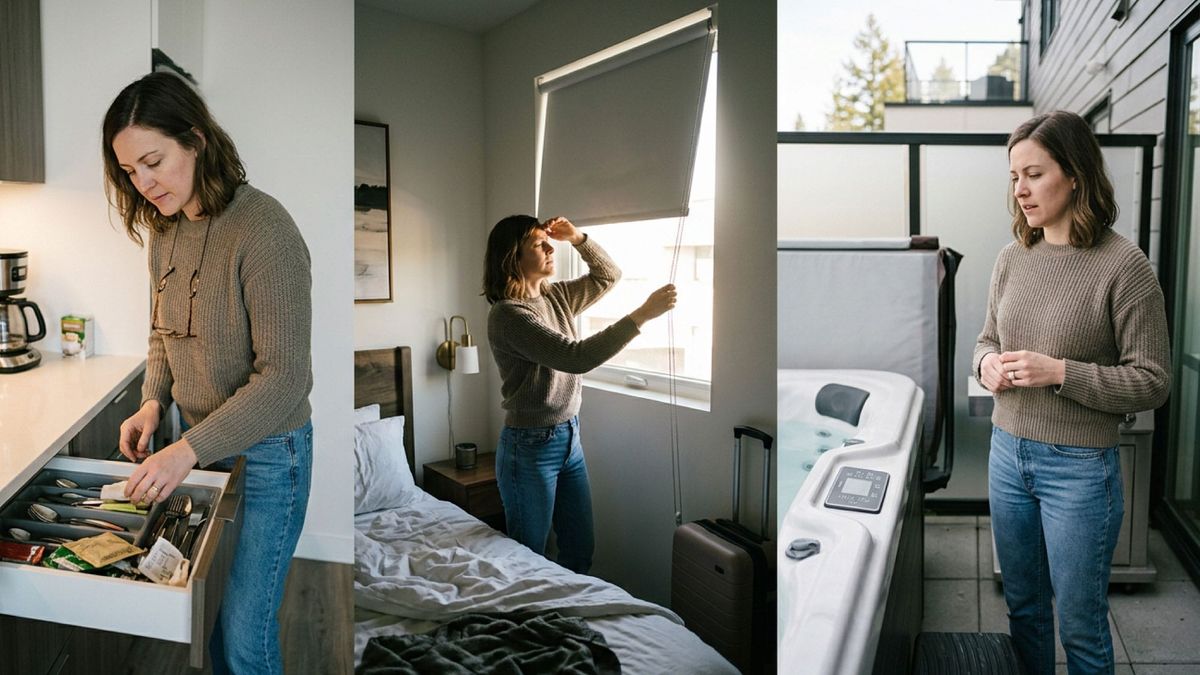
It is not usually dramatic. The gap rarely announces itself as a clear failure. It presents instead as a persistent, low-level mismatch between what the guest hoped the space would do and what the space actually does. The kitchen that was described as fully equipped but requires fifteen minutes to navigate before a guest can cook breakfast. The bedroom described as a peaceful retreat that lets enough light in at six in the morning to wake someone who needed to sleep until eight. The outdoor space described as ideal for entertaining that is arranged in a way that makes entertaining slightly more effortful than it should be.
None of these produce complaints. All of them produce friction. And friction, accumulated across a stay, produces the experience gap that shows up as a four-star review from a guest who says the property was great and does not come back.
Why Friction Never Shows Up Clearly in Reviews
Understanding why friction is invisible in guest feedback is essential to understanding why the Second Law requires a proactive methodology rather than a reactive one.
Guests are not trained observers of the environments they inhabit. When they experience friction, they do not identify its source. They feel its effect. A guest who cannot find the coffee filters does not think there is an informational friction point in the kitchen storage system. They think they cannot find the coffee filters, they search for them, they feel a flicker of mild frustration, and they move on. The moment passes. The flicker does not.
Across a three-night stay, that guest might accumulate eight or ten of those flickers across different zones of the property. Individually, none of them rise to the level of a complaint. Collectively, they compose the low-level register of the entire stay. The guest ends the trip feeling like it was mostly good, slightly harder than it needed to be in ways they cannot fully name, and worth recommending with a qualifier or two. Four stars. Good stay. Nice place.
The host reads that review and sees confirmation that things went well. The review is not confirmation that things went well. It is documentation that things went well enough, which is a different thing entirely, and it is documentation that will repeat itself stay after stay as long as the friction that produced it remains in place.
This is the mechanism the Second Law is addressing. Friction does not self-report. It accumulates and compounds and produces a specific pattern of guest behavior, and that pattern is legible only to someone who knows what to look for. The host who does not know what to look for will keep reading four-star reviews and interpreting them as evidence of a successful property rather than a slightly underperforming one.
The Anatomy of a Friction Event
Every friction event in a guest stay has the same basic structure. Understanding that structure is the first step toward developing the skill to find friction before a guest does.
A friction event begins with an intent. The guest wants to do something. Cook a meal. Go to sleep. Figure out how the outdoor shower works. Start a fire in the fireplace. Something they came to the property expecting to be able to do.
The intent meets the environment. The environment either supports the intent or it does not. If it supports the intent, the behavior happens smoothly and the moment passes without registering. If the environment resists the intent, a friction event occurs.
The friction event produces an adaptation. The guest works around the resistance. They find a different drawer. They prop a pillow differently. They give up on the fire and watch television instead. The adaptation resolves the immediate situation but leaves a residue. That residue is what accumulates into the texture of the stay.
Finally, the adaptation is forgotten consciously but retained emotionally. The guest does not remember the specific moment at review time. They remember that the stay felt slightly effortful in an undefined way. That feeling is what they translate into a four-star rating and a review that is positive but not enthusiastic.
Mapping friction events before a guest encounters them requires thinking through the full sequence of intents a guest is likely to bring to the property and evaluating each one against what the environment currently produces. This is the core of the Friction Audit.
The Art of Finding Friction
Finding friction before the guest does is a skill. It is not intuition. It is not a matter of caring more or paying closer attention in a general sense. It is a specific, practiced discipline of evaluating an environment from the guest's perspective with enough methodological rigor to surface what familiarity has made invisible.
The first and most foundational practice is perspective displacement. The evaluator must genuinely set aside what they know about the property and attempt to receive it as a first-time guest would. This is harder than it sounds. Familiarity is not just a habit of thought. It is a perceptual filter that edits out information that the familiar mind has already processed and filed. Overriding that filter requires deliberate technique, not just intention.
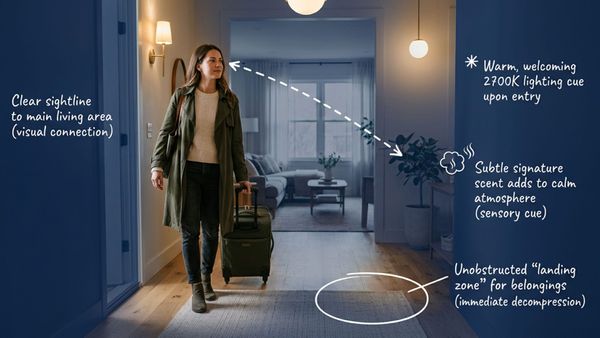
One technique is the staged entry. The evaluator leaves the property, waits, and re-enters with the explicit assignment of experiencing every signal from the first moment of contact. What does the approach communicate? What does the entry communicate? Where is the first moment of uncertainty, and what caused it? What does the eye find first inside the space, and what does that landing communicate about priority? The staged entry is designed to recreate, as closely as possible, the perceptual experience of the arriving guest.
A second technique is intent tracing. The evaluator selects a set of specific guest intents, I want to make coffee, I want to sleep in tomorrow, I want to have dinner outside, I want to know what I am not supposed to do, and traces each intent through the environment, step by step, from the moment the intent forms to the moment it is either satisfied or abandoned. Every point where the trace encounters resistance is a friction point. Every point where the trace requires information that is not clearly available is a friction point. Every point where the trace requires the guest to adapt their behavior to the environment rather than the environment supporting their behavior is a friction point.
A third technique is the review translation. The evaluator reads past guest reviews not for what they say explicitly but for what they imply. Fine and comfortable and nice but and we wish and it would have been better if are all friction signals wrapped in polite language. A host who learns to read reviews as friction documentation rather than satisfaction scores develops a backward-looking version of friction detection that, combined with the forward-looking techniques above, creates a comprehensive picture of where the experience is breaking down.
The Friction Audit in Practice
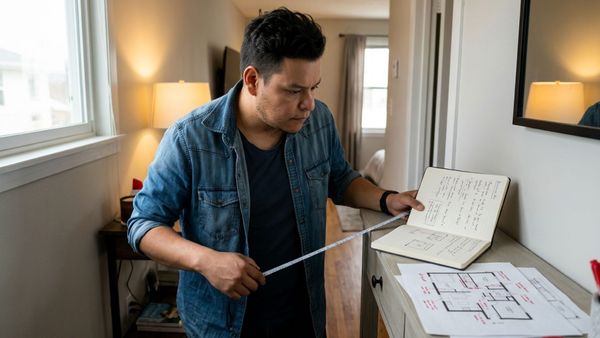
The Friction Audit is the structured methodology GBA uses to apply these techniques systematically across an entire property. It is not a walkthrough. It is a zone-by-zone, channel-by-channel evaluation that documents every friction point with enough precision to act on it.
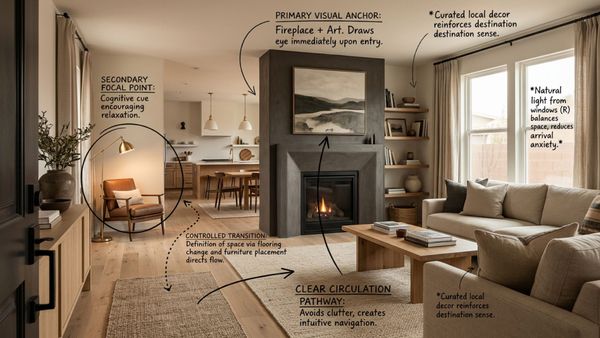
The audit moves through each of the four behavior zones in sequence, evaluating the zone against its behavioral purpose. For the Arrival Zone, the evaluating question is whether a first-time guest can arrive, orient, and land without encountering resistance. For the Gathering Zone, the question is whether the space communicates permission and makes the behaviors of gathering easy. For the Restoration Zone, the question is whether the environment produces the conditions for genuine rest. For the Experience Zone, the question is whether the property's distinguishing features are accessible, usable, and delivered at the quality the listing implied.
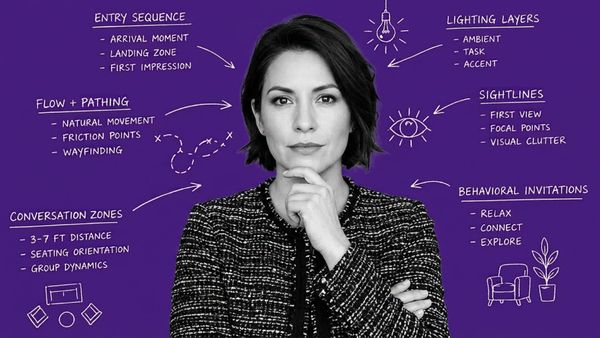
Within each zone, the audit evaluates each of the four friction types. Physical friction: does the layout, furniture placement, or spatial configuration create resistance? Sensory friction: do light, scent, sound, or temperature work against the behavioral purpose of the zone? Informational friction: is there any moment where the guest needs information that is not clearly present? Emotional friction: does anything in the zone create a gap between the expectation the listing set and the experience the space delivers?
The output of the Friction Audit is the Friction Map, a complete, named, zone-by-zone documentation of every friction point found in the property. The Friction Map is the foundation for the Design Prescription that follows, which translates each identified friction point into a specific, buildable change.
Some of what the Friction Map reveals is inexpensive to address. Reorganizing a drawer. Repositioning a chair. Adding a piece of information to the guest welcome materials. Moving a decorative object off a counter. Some of it requires more investment. But all of it is addressable, because all of it is specific. Vague discomfort cannot be designed away. Named friction can.
Finding It Before the Guest Does
The Second Law is a law because it describes something that is always true, not something that is occasionally relevant. Friction is present in every property. The host who accepts this is positioned to find it and remove it before it compounds across a guest stay. The host who believes their property is friction-free is not operating without friction. They are operating without the awareness of friction, which is a different and more costly condition.
The four-star review that does not explain itself, the guest who does not rebook a property they did not dislike, the listing that consistently performs just below its potential, these are the symptoms. The friction is the cause. And the cause is always findable, once the host has developed the skill and the methodology to look for it honestly.
That skill is what the Friction Audit builds. And everything the Design Prescription recommends comes from what the Friction Audit finds.
Find it before the guest does. That is the whole instruction. The rest is method.